


Introduction: Traffic Doesn’t Equal Sales
Most ecommerce brands focus heavily on driving traffic—ads, SEO, social media—but still struggle with low sales. The real problem usually isn’t traffic. It’s what happens after visitors land on the website.
A conversion-optimized website is designed to guide visitors toward action—whether that’s making a purchase, signing up, or adding products to cart. Without optimization, even the best marketing campaigns fail to deliver ROI.
What Is a Conversion-Optimized Website?
A conversion-optimized website is built with user behavior, trust, and clarity in mind. Every section, button, and interaction serves a purpose.
Key characteristics include:
- Clear value propositions
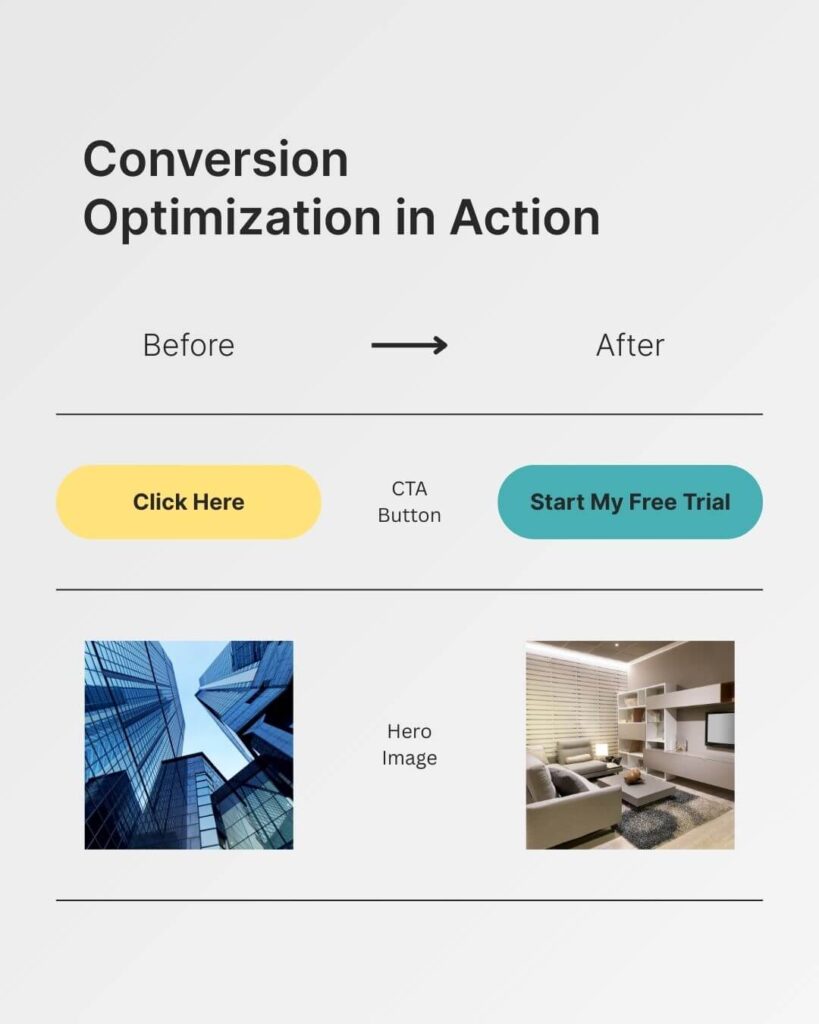
- Strong calls-to-action (CTAs)
- Fast load speed
- Mobile-first layouts
- Frictionless checkout
- Trust signals (reviews, guarantees, policies)
Why Conversion Optimization Matters for Ecommerce Brands
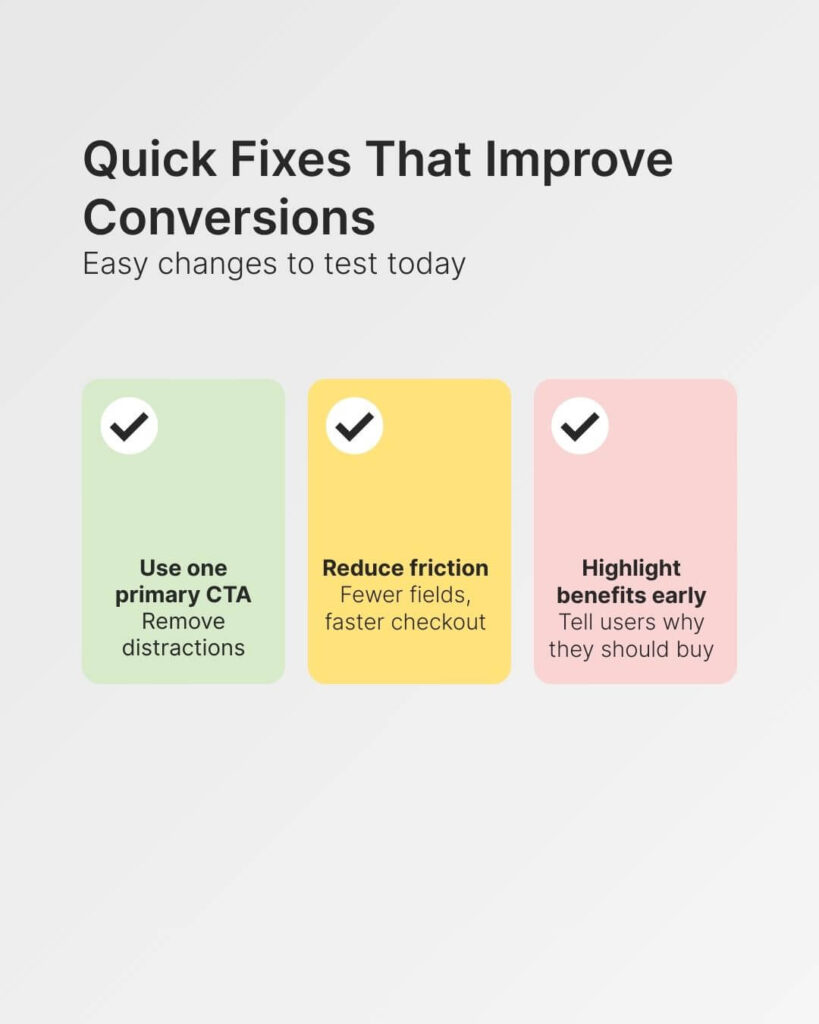
More Sales Without More Ad Spend
A higher conversion rate means you earn more revenue from the same traffic.
Better User Experience = Higher Trust
Conversion-focused websites remove friction and build credibility.
Mobile Optimization Is No Longer Optional
Mobile-first design is essential for modern ecommerce.
Faster Websites Convert Better
Speed improves both SEO rankings and conversions.
SEO Brings Traffic, CRO Turns It Into Revenue
Optimized websites align naturally with Google’s ranking signals.
Common Conversion Mistakes Ecommerce Brands Make
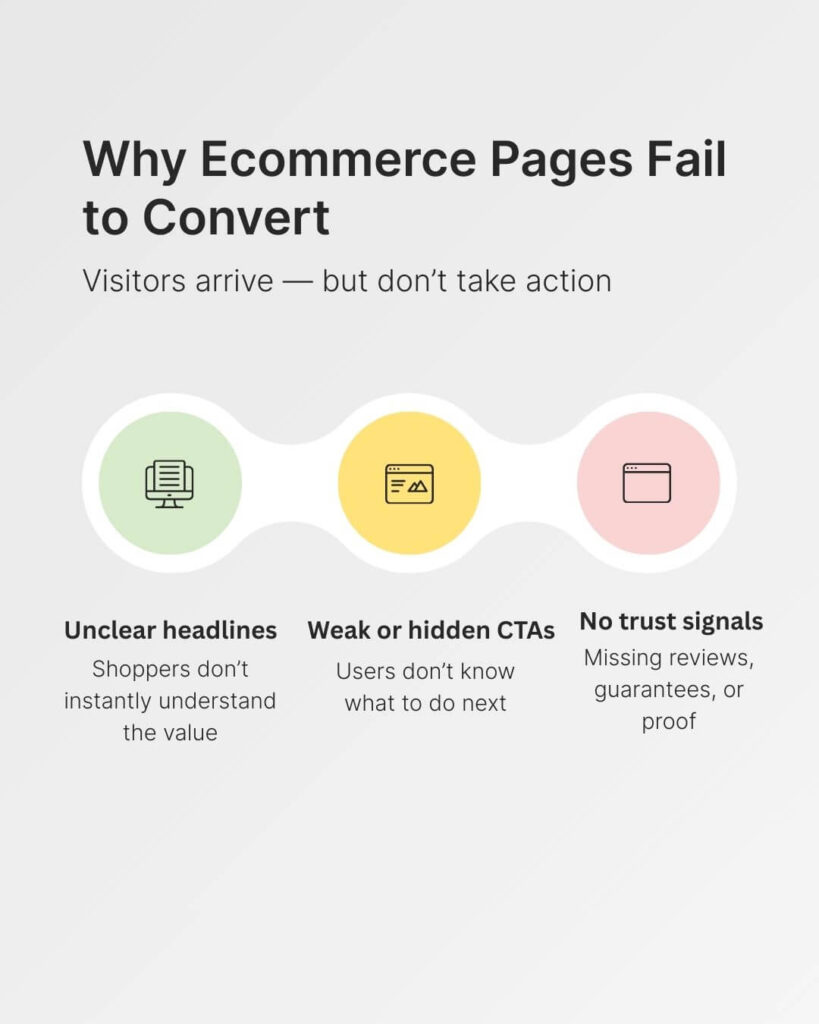
- Weak CTAs
- Complicated checkout flows
- Hidden pricing and shipping info
- Ignoring user behavior data
What a Conversion-Optimized Ecommerce Website Includes
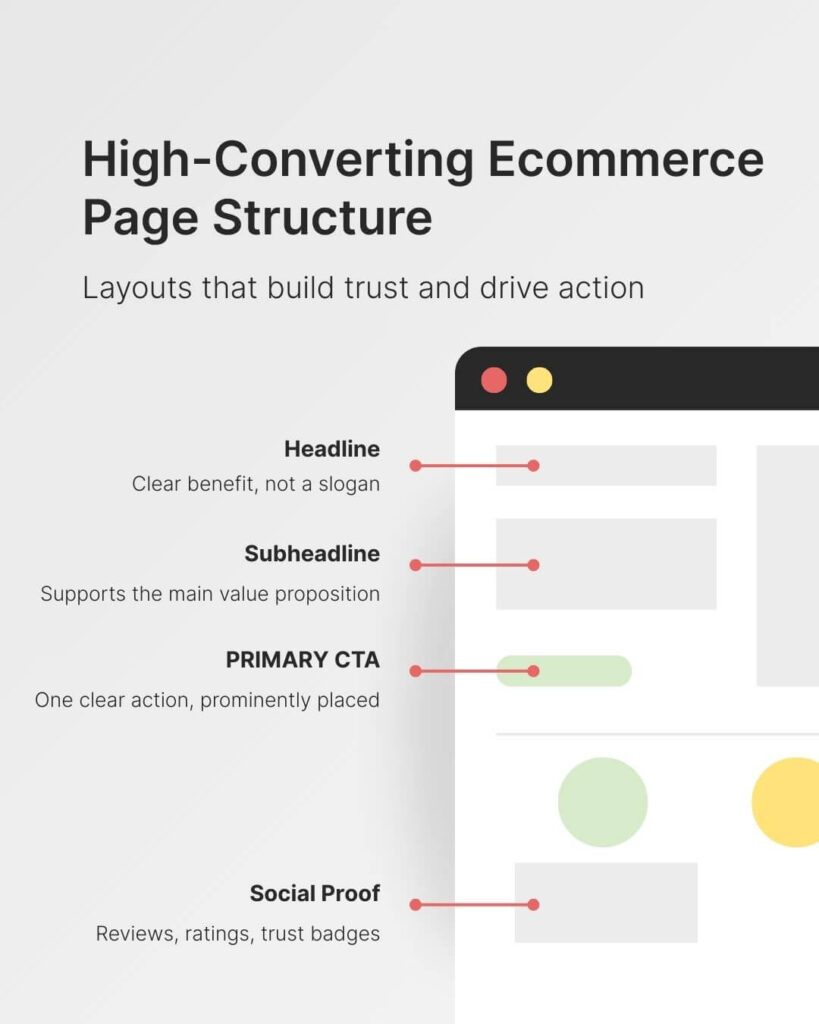
Homepage:
- Clear value proposition
- Trust signals
- Strong CTA
Product Pages:
- High-quality visuals
- Persuasive copy
- Reviews and FAQs
Checkout Flow:
- Minimal steps
- Guest checkout
- Secure payment indicators
Final Thoughts
A beautiful website might impress—but a conversion-optimized website sells.